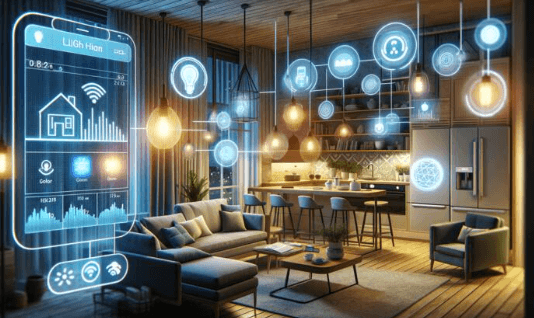
Connected living through IoT weaves devices, services, and data into a cohesive system for automation, monitoring, and decision support. It emphasizes security-by-design, standardized interfaces, and clear governance to ensure safe, interoperable deployments. Users govern consent and automation levels, with ongoing updates and risk assessments. Real-time intelligence optimizes energy use, comfort, and health insights, while maintaining data minimization and auditable modular components that preserve trust. The next step reveals how to implement these foundations in practice.
What Is Connected Living, Really?
Connected living refers to the integration of everyday devices, services, and data streams into a cohesive ecosystem that enhances automation, monitoring, and decision-making.
The concept centers on accessible control and reliable outcomes. Definition clarity is essential to prevent ambiguity, while interoperability challenges must be addressed to ensure seamless operation.
User agency remains paramount, guiding choices, consent, and preferred automation levels for freedom and resilience.
How to Design a Safe, Interoperable IoT System
Designing a safe, interoperable IoT system requires a structured approach that prioritizes security-by-design, standardized interfaces, and robust governance.
The design emphasizes interoperability standards to enable cross-vendor communication and scalable deployment.
It also enforces lifecycle management practices, including continuous updates, credential hygiene, and threat monitoring, ensuring resilience.
Clear governance enables freedom to innovate without compromising safety or compatibility across heterogeneous components.
Practical Ways IoT Lowers Energy, Boosts Comfort, and Health
IoT-enabled systems reduce energy use, enhance occupant comfort, and monitor health through data-driven automation and responsive control. Automated HVAC scheduling, adaptive lighting, and real-time appliance management yield energy savings while maintaining consistent comfort.
Wearable and environmental sensors support health monitoring within privacy boundaries, enabling targeted interventions.
The approach emphasizes transparency, interoperability, and user autonomy, delivering practical, scalable improvements without sacrificing freedom or control.
What to Watch For: Privacy, Security, and Boundaries in IoT Use
What privacy, security, and boundary considerations shape responsible IoT use, and how can users and operators systematically address them? The piece outlines practical controls, data minimization, and transparent governance. It highlights privacy pitfalls and security boundaries as core design criteria, recommends regular risk assessments, end-to-end encryption, and clear access policies, and promotes modular, auditable deployments that preserve user autonomy and trust.
See also: Connected Living Environments
Frequently Asked Questions
How Does Iot Impact Daily Routines for Families?
IoT reshapes family routines by automating chores, optimizing energy use, and coordinating schedules. Smart home rituals create consistent, hands-free interactions, reducing friction. It emphasizes privacy-respecting controls, empowering families with control while preserving freedom and autonomy.
What Are Common Iot Integration Challenges in Homes?
Integration latency and privacy concerns surface as common IoT home challenges; solutions-oriented measures address these prudently, enabling smoother interoperability, robust data governance, and user autonomy while preserving efficiency and freedom in daily smart environments.
How to Choose User-Friendly Iot Devices for Seniors?
User-friendly devices should prioritize simple setup, clear labels, and reliable performance; senior-friendly interfaces emphasize large text, tactile controls, and guided prompts, with ongoing support. Solutions-oriented evaluation considers accessibility, interoperability, privacy, and freedom from frequent updates.
Can Iot Reduce Maintenance and Repair Costs Long-Term?
IoT can reduce long-term maintenance and repair costs, if systems leverage maintenance analytics and predictive scheduling to anticipate failures; this data-driven approach lowers downtime, extends asset life, and enables proactive, freedom-focused decision-making for operators.
What Incentives Exist for Adopting Smart Home Tech?
Incentives for adoption include potential cost savings, improved energy management, and enhanced home security. Smart home benefits encompass convenience, remote monitoring, and insurance discounts. Adoption decisions balance upfront costs against long-term efficiencies and personal risk tolerance.
Conclusion
In summary, IoT-enabled living advances through careful coordination of devices, data, and safeguards. By embracing security-by-design, standardized interfaces, and transparent governance, systems remain reliable and interoperable while preserving user autonomy. Ongoing risk assessments and consent-driven automation offer predictable, privacy-respecting enhancements to energy use, comfort, and health insights. As boundaries evolve, modular, auditable components enable sustained trust, enabling households to benefit from connected convenience without overstepping personal limits or compromising safety.