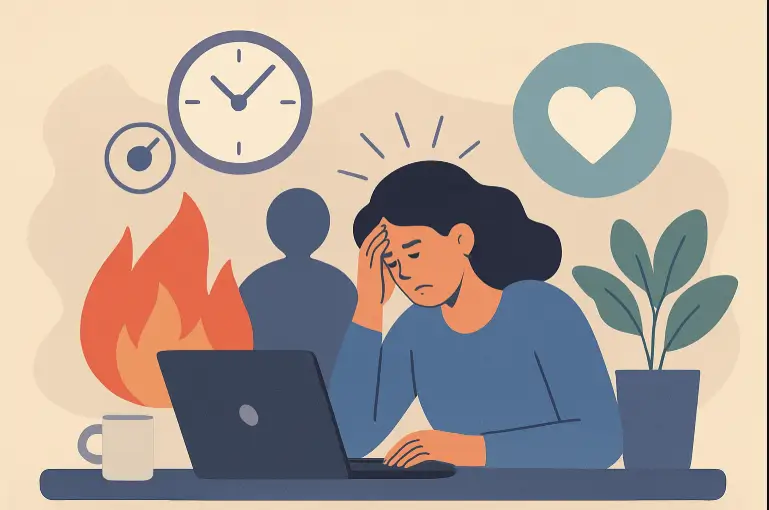
The modern student journey exists primarily within the glow of a screen. From virtual lectures and discussion boards to digital libraries and online submissions, the physical classroom has shifted into a virtual space. While this transition offers flexibility, it also creates a unique challenge: academic burnout. When your bedroom becomes your lecture hall and your laptop serves as your only social connection to school, the boundary between “working hard” and “drowning” disappears. Understanding how to handle this pressure is essential for long-term success.
Recognizing the Signs of Digital Fatigue
Burnout is not just a passing feeling of being tired. It is a state of emotional, physical, and mental exhaustion caused by prolonged stress. In a digital environment, this often manifests as “Zoom fatigue,” a persistent lack of motivation, or even physical symptoms such as headaches and eye strain.
When you find yourself staring at an assignment for hours without making progress, or when the thought of logging into your student portal creates an immediate sense of dread, your brain is signaling that it needs a shift in strategy. Acknowledging these symptoms is the first step toward reclaiming your academic rhythm. Ignoring them often leads to a cycle of procrastination, which only compounds the stress you feel when deadlines loom.
Establishing Boundaries in a Virtual World
One of the hardest aspects of digital learning is that your workspace is everywhere. Because you carry your classes in your pocket or bag, it feels impossible to disconnect. To fight this, you must treat your digital environment with the same rules you would apply to a physical one.
Designate a specific area for your studies. Even if you live in a small space, keep your desk strictly for academic tasks. When you finish your work, close your tabs, put the device away, and walk out of that space. Creating these physical cues helps your mind transition from “focused” mode to “recovery” mode. If you struggle to balance complex topics, you might find that professional exam help provides the structure needed to manage your workload without feeling overwhelmed.
Mastering Time Management for Digital Learners
The flexibility of online learning is often a double-edged sword. Without a set schedule, hours slip away, leaving you scrambling to finish tasks at night. Use tools like the Pomodoro technique to break your day into manageable intervals. Work for fifty minutes, then step away from all screens for ten.
During these breaks, move your body. Stretching, grabbing a glass of water, or simply staring out a window at something distant resets your visual and mental processing. This rhythm prevents the “stagnation effect” that often leads to burnout. By compartmentalizing your tasks, you turn a massive pile of responsibilities into a series of small, achievable victories.
See also: Connected Living Through Technology
Cultivating Human Connections
Digital learning can be isolating. When you only interact with peers through text boxes or muted video calls, you lose the support system that naturally forms in physical classrooms. Combat this by finding ways to engage with classmates outside of formal assignments. Start a study group via a video platform or participate in online forums that focus on shared interests rather than just academic deadlines.
Having someone to talk to about the difficulty of a specific course—or even just to vent about a long week—removes the weight of carrying it alone. Remember that your academic journey should be collaborative. If you find yourself hitting a wall with technical subjects, utilizing accounting exam help can be a great way to bridge gaps in your understanding while reducing the pressure on your individual performance.
Prioritizing Physical and Mental Wellness
Your brain is an organ that requires fuel and rest to perform at its peak. Excessive screen time disrupts sleep patterns, which in turn hinders your ability to retain information. Try to implement a “digital sunset” at least one hour before bed. Swap your laptop for a physical book or a paper planner.
Nutrition and hydration are just as important as your study schedule. When deadlines are approaching, it is easy to rely on caffeine, but this often leads to a crash that makes burnout worse. Focus on balanced meals and consistent water intake to keep your energy levels steady throughout the day.
See also: Connected Living Through Technology
Re-evaluating Your Academic Goals
Sometimes, burnout stems from a misalignment between your efforts and your expectations. Digital learning requires a different set of skills than traditional classroom work. It demands more self-discipline and independent problem-solving. If you feel stuck, take a moment to reflect on your goals. Are you pushing yourself toward a standard that is unrealistic?
Be kind to yourself. Adjusting your pace does not mean you are failing; it means you are being strategic. Break down your course requirements into smaller, non-negotiable milestones. Celebrate the completion of these milestones to keep your motivation high.
Conclusion
Academic burnout is a real hurdle, but it is not a permanent state. By setting physical boundaries, utilizing effective time management tools, and remembering to include human interaction in your routine, you can navigate the digital learning space with confidence. You are more than your output. Prioritizing your well-being ensures that you can complete your education feeling capable and prepared for the future, rather than depleted.